Tuesday, May 27

every line means something


All that music talk got me thinking about how skateboarding is also linked tightly with art.

Deck art has become an artistic medium in itself, spawning hundreds of different styles. A recent exhibition at China Heights in Sydney essentially consisted of 40 skateboards with controversial art based on themes of sex, drugs and violence. I thought this was interesting because it linked back to the idea of skating as a form of social deviance.


Alot of this is linked with graffiti and street art. Ed Templeton (who used to skate professionally and founded Toy Machine Skateboards), Geoff McFetridge, Harmony Korine (who I mentioned earlier), the late Margaret Kilgallen and Barry McGee founded an art collective known as Beautiful Losers. The group recently released a film of the same title which looks at each artist's work individually while focusing on the group's ideology and the links between art, skateboarding and music. WATCH THE TRAILER HERE:


Skate photography has also evolved into an art form in its own right. Here are some photos from a cool photo blog by a local skater.


Monday, May 26

SKATE AND DESTORY


Skateboarding as been consistently connected with music, from punk to metal to hip hop.


Early skate culture was largely linked to punk music and the social subversion tied to that culture. The term skate punk was coined to refer to punk music favoured by skaters; such as Jay Adams' favourite Suicidal Tendencies, who started in the early 80’s in Venice Beach (home to the Z-Boys). Above is a picture advertising a compilation put together by Trasher, the image (an appropriation of imagery used by metal bands such as Slayer and Iron Maiden) provokes somewhat nefarious and subversive connotations, highlighting the way in which cultures are linked by shared ideals and attitudes.

Below is a film clip by Australian hip hop group
Katalyst
. I thought it was interesting the way they used skate boarders. Some might think it is just to look cool, while others may see a more underlying conceptual link between the two cultures.

girls, girls, girls!


I saw this ad on the Thrasher website:


It got me thinking about whether Skateboarding is a misogynistic culture, or merely looks like it is because the culture is dominated by males? After trawling the Interenet I found a website dedicated to the cause:
"gurlz on boardz"

Interestingly one of the original members of the Z-Boy team was a girl..


Where have all the Peggy Oki's gone?

CONCRETE WAVE


VS.


"Surely it is the supreme illusion to defer to architects, urbanists or planners as being experts or ultimate authorities in matters relation to space." (Lefebre, 1991)

don't you know tricks are for kids?

Filmic, photographic and written documentation of skateboarding have all influenced perceptions of the culture.

Harmony Korine’s film Kids (1995) documented a day-in-the-life of a group of New York skaters and their friends, creating an arguably poignant image of self-destruction, sexuality and drug abuse. Korine cast boys from a local New York skate park with no previous acting experience creating a realistic representation of the sub-culture within the context of New York in the mid-nineties. Here is the trailer:


Harold Hunter, who stars in the film, went on to become a professional skateboarder sponsored by Zoo York.


Another film to check out is Gus Van Sant's Paranoid Park. Sant is famous for his somewhat minimalist approach to film with movies such as Jerry, My Own Private Idaho, Last Days and Elephant. The later films both blended fact and fiction with Last Days based on Kurt Cobain's Suicide and Elephant on the Columbine School Massacre. Paranoid Park is based on the O'Bryant Square
skatepark in Portland nicknamed Punk Park and Paranoid Park
and again depicts the link between skateboarding and rebellious youth.
CHECK THE TRAILER:


sell out

My post on advertising got me thinking about way in which skateboarding has become increasingly mainstream. There seems to be a conflict between the more commercialised facets of skateboarding and those clinging to the antagonism of the OG's such as Scott Oster and Jay Adams, who once said skating was about: "violence and acting crazy."


Tony Hawk, is credited with the invention of many aerial skateboarding tricks such as the Madonna, Stalefish and McHawk, and is probably most famous for being the first recorded skateboarder to land the 900, which consists of a 900° rotation in the air before landing back on the pipe, during the televised X Games on June 27, 1999. Yet Hawk has almost become a household name not just due to his skateboarding, rather his side projects including his own film and TV production company (900 films), his clothing brand Hawk Clothing, an apparel and footwear line sold exclusively at Kohl's and his skateboarding game series which since its launch in 1999 has release 10 games. In many ways Hawk has brought skating to the mainstream.


EA games has also released 'SKATE the game', similar to Tony Hawk's Pro Skater. These games star real skaters such as Jerry Hsu, Dustin Dollin, Rodney Mullen and Mike V.


Another skater who has brought skating to the mainstream is Ryan Sheckler (below). Aside from skateboarding Sheckler stars in a MTV reality show; Life of Ryan, has hosted TRL on MTV, his own merchandise and an official "fan site" which allows girls to send in photos of themselves which are later posted on the website.


Yet there seems to be a conflict between skating in the mainstream and skating as a subversive subculture.This is pretty clear if you compare magazine like Thrasher, who promote the adage Skate and Destory, against something like Transworld, which paints a far more adherent picture of skateboarding.


Can something still be a subculture if it is mainstream?

because you're worth it

Style is inherently linked to the concept of subcultural capital - which essentially examines the ideas that there are particular items, fashions etc. that are an integral part of the culture. The commodification of skateboarding has been an issue since the Zephyr boys came to fame in the 1970s.


VANS ad from the 1970s:


VANS ad from the 1980s:


VANS ad from now:


passion for fashion

“Subcultures articulate their opposition principally through exploiting the significance of styles or dress and patterns of behaviour.” (Edgar & Sedgewick 1999)


I found a website How to Buy the Right Clothes for Each Skateboard Look and I'm still not sure if it is sarcastic or not. Either way it provides a pretty good insight into the inherent link between subcultures and style/fashion.


Alternatively, here is a clip by a dude who says he will teach you to be "awesome", with tips on fashion, attitude and keepin' cool:


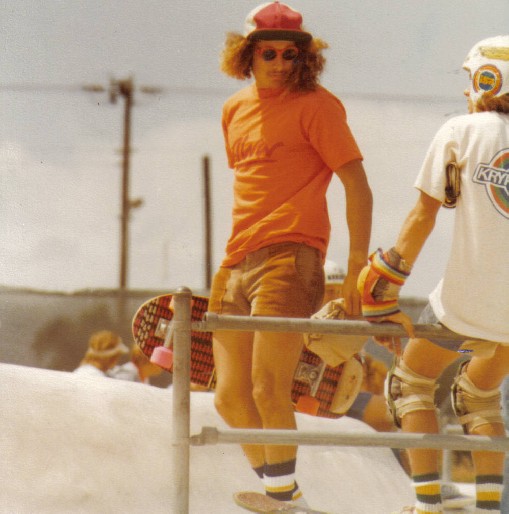
I thought it was funny looking through old photos of skaters to see how fashion has changed. In the end it is still about looking like a skater, based on a seeming contradiction: distinguishing yourself from wider society while trying to promote a sense of unity between skaters. Here is a brief look at different decades of fashion:

NOW


Somewhat ironically I found an ad (below) from the 1980s, on Tony Alva's photography website, for the glasses that Jerry Hsu is wearing in a photo from 2007 (above).


1990s


1980s


1970s


ain't it fun


An integral part of skate culture is friendship and creativity. A local skater said he liked the way "...old/better guys would help him out or teach him a new trick." Here is a short clip featuring a Sydney skater teaching you how to 360 ch-ch-ch-check it out:


Below is the trailer for a skate video by some Australian skaters. Red Bull sponsored 10 of them, plus a few photographers/filmers, to go on a trip to Perth. I like the way that alot of the footage is of them just illin.


Acceptable in the '80s

THRASHER magazine published a list of 1980's skate slang.
A few words are still used today, i'll post a similar list for contemporary skate boarding later.


BAIL:
The act of falling.
BETTY: Female skate groupies.
BIZOTIC: Extreme, extraordinary.
BRAH:
Skate bros; a sign of camaraderie.
BUNK: Not good.
DENIAL: Refuse others to come on your skate trip,
or to reject a girl; "I denied that betty."
DWID: Someone who is not cool in any way.
FACE PLANT: LAnding flat on your face.
GNARLY: A heavy-duty, no-bull attitude;
"Watch out! He's a gnarly guy."
KOOK: Person with virtually no brains.
MAXI: One of the highest degree obtainable or allowed.
PREPPIE: Someone bound by a rigid code dedicated to
immaculate orderliness in dress and behaviour.
RIPPER: One who can, by means of skateboard or
simply by philosophic attitude, take total control of
the situation.
ROBOT: Skater with no style.
SCAM: To receive products, coverage or favours without
really deserving them.
SCUMLINE: Line of water in a pool or resevoir that
has to be bailed out before the area is skateable.
SHRED: The art of ripping it up on a skateboard;
"He shredded those barrels."
SKETCH: To momentarily space out.
SLAM: To make full-on contact with the ground.
SNAKE: Cut off a rider while they're skating.
STICK: The thing that keeps you going, your reason
for living, your skateboard.
STOKED: To be overwhelmed with enthusiasm;
"I'm stoked with that board."
THRASHER: One who completely dominates what he
attempts; "He totally thrashed the pool."
WANNABE: Someone who craves a certain lifestyle
or social status.
WILSON: Bad fall, usually resulting in injury.

AND here's a list of contemporary slang (lotsa the words above are still used today)..

BRO:
Friend.
CREW: Group of friends who skate or hang out
together.
___DOWN: Terms with any word in conjunction with
the word down; eatdown, brodown etc.
FEATCH: Good.
GNARLY: Extreme (same meaning as the 1980s)
MOB: Not very good.
OG: Literally stands for Original Gangster, but is used
to refer to anyone who started a trend or was there
at the beginning of something.
SESH: Session.
SET: A set of stairs; "you just ollied that twelve set!"
SPROUTER: Young babe, similar to the word Betty.
STREET: Type of skating done on the streets;
using curbs, rails and stairs.
RAD: Cool, good.
VERT:
Type of skating involving half-pipes.


CONCRETE WAVE

Skateboarding, or sidewalk surfing, developed out of surfing culture as a way for surfers to practise even when the surf was flat.


The sport was popularised by the Zephyr Skate Team (Z-Boys) in Santa Monica, California, during the 1970s. The founding team consisted of
Jay Adams, Chris Cahill, Allen Sarlo, Stacey Peralta, Tony Alva under the guidance of Jeff Ho, Skip Engblom and Craig Stecyk who ran the local surf shop: "Jeff Ho Surfboards and Zephyr Productions", on Main Street in Dog Town Venice.
The Z-BOYS debuted at the Del Mar Nationals in March 1975.


"There was so much aggression...they were more like a street gang than a skate team"
Skateboarder Magazine 1975


In 2005 Lords of Dogtown was released, documenting this
revolution through a mix of both fact and fiction.
WATCH IT HERE: